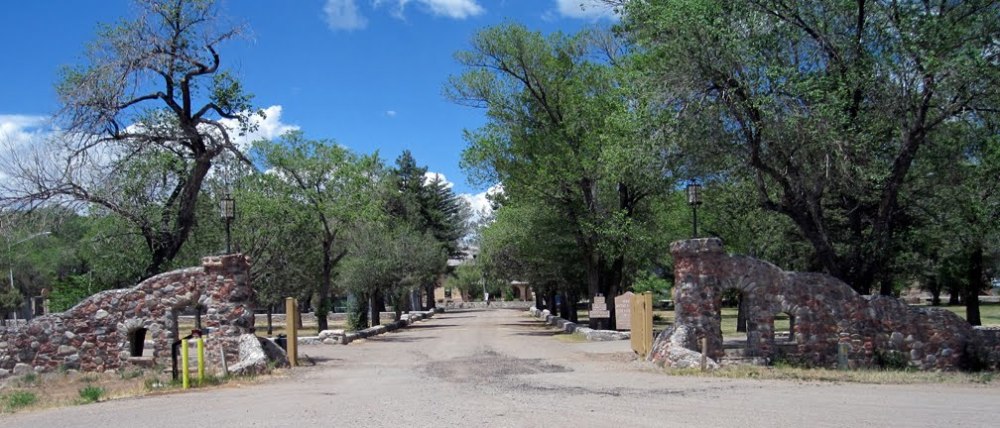
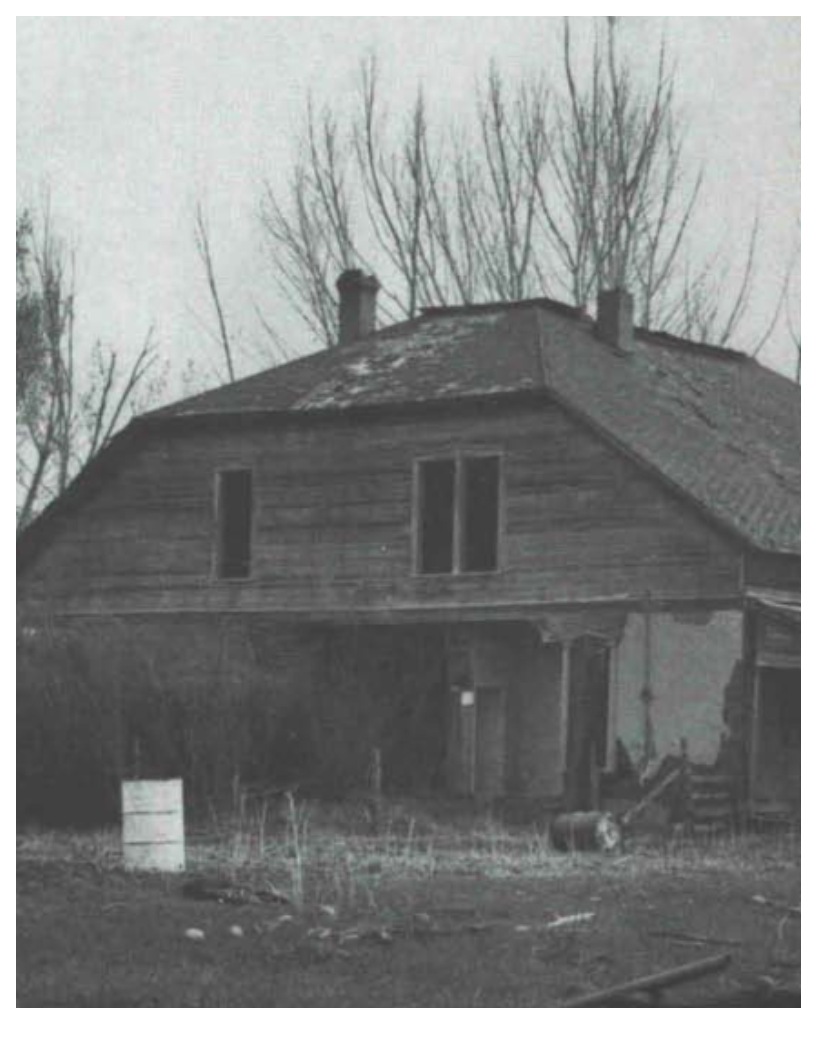
1909-1969 The most important and enduring accomplishment of El Rito in the early part of the twentieth century (1909), was the creation of the Spanish American Normal School. The school was of the utmost significance in the history of New Mexico’s early Educational advancement. It advantageously benefitted the educational needs of the students of Northern New Mexico for over sixty years. Everyone was in for a surprise in 1909 when New Mexico declared open the Spanish American Normal School at El Rito. The school had been founded to train teachers for the vast region of the
Río Arriba in which there were few schools and the citizenry still did not speak English, sixty years after becoming a territory of the United States. The Territory of New Mexico, in quest of statehood, had decided that fluency of its people in English would earn it the right to become one of the Forty-eight, which it did three years later. State and school officials were dismayed that few students were sufficiently prepared to become teachers. First, most had to learn to cipher and to read and write. The region's geographic isolation, scant means of communication, and lack of roadways rendered it impossible for anyone to make the proper estimate of educational need, it turned out. But the school's students soon discovered how much they liked the Normal School, and how willing the school was to meet their educational need. Although the Normal School trained as many as one hundred teachers in the first decades, in time it became an elementary and high school with strong traditions and loyal students. As a boarding campus, the Normal School attracted students from throughout New Mexico, many at a very young age. Children of the Normal School recount how unity of spirit created a new culture of Americans that few knew about, and how their esprit was built on mutual esteem and shared belief. Through the traverse of time, the Normal has endured a variety of social, legislative, and financial obstacles. Its founding in 1909 was hampered by territorial legislators who failed to see the needs for education of poor Hispanic children in Northern New Mexico. Its rural area was populated by Hispanic people that were descendants of early settlers from Spain, living in very small villages and their livelihood was derived from raising cattle and sheep. The green valleys provided small streams to irrigate their gardens and pastures. They were consumed with basic survival and had little time or inclination to meander into the realm of politics. The territorial legislators were highly influenced by the larger populated cities and the eastern part of the state. Northern New Mexico was a rural area and its needs were diffused by the vastness of geography, the scarcity of its population and regretfully, the fact that it was mainly a poor Spanish-speaking populace. The economics of the territory were less than prosperous. The territory lacked a cohesive government infrastructure, no real industrial base existed and notably, it lacked a well defined system for education. To further distract from its education mission, the territory was in the midst of battling an image of ignorance that had hampered its entrance into the union as the 47th state of the United States. The fact that the Spanish language was the primary language spoken further hampered the entrance of the Territory of New Mexico into the Union. Not withstanding, all these obstacles, objections and oppositional forces, the NORMAL was legislated into existence in 1909, before New Mexico had become a state. Largely through the efforts of three men, a legislator, Colonel Venceslao Jaramillo, an El Rito native, Salomon Luna, a senior statesman from Tierra Amarilla, that became a spokesman for the preservation of the language and culture of the Hispanic people, and L. Bradford Prince, a Chamita resident. Prince, a former territorial governor, who established the New Mexico College and university system and later was the territorial senator from Rio Arriba County. These three men understood the need for education, had a vision to fulfill the need, and exerted their influence to establish the Spanish American Normal School. The original objective of its creation was to train students to become teachers for the local schools in Northern New Mexico. The Normal’s mission evolved through its sixty year history. Its mission never deviated from its goal to educate and prepare students to lead fruitful and successful lives. Its last senior graduating class was in 1969. Sixty years after opening its doors for the first enrollment in 1909. The school’s educational mission was moved to a campus in Espanola and is now known as Northern New Mexico College, where it continues to provide educational opportunities to students of Northern New Mexico. In 1939, a study was done of the school, as part of a thesis.
You can read that here IF YOU ATTENED OR WERE PART OF THIS SCHOOL, WE WANT TO HEAR FROM YOU.
DO THAT BY JUST CLICKING HERE.
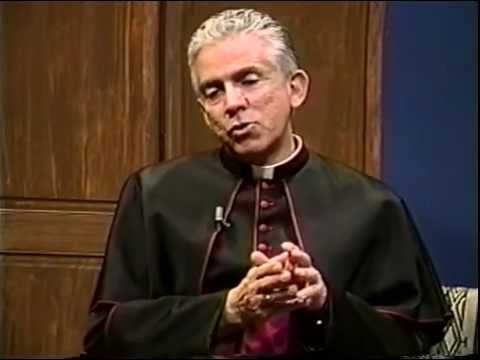
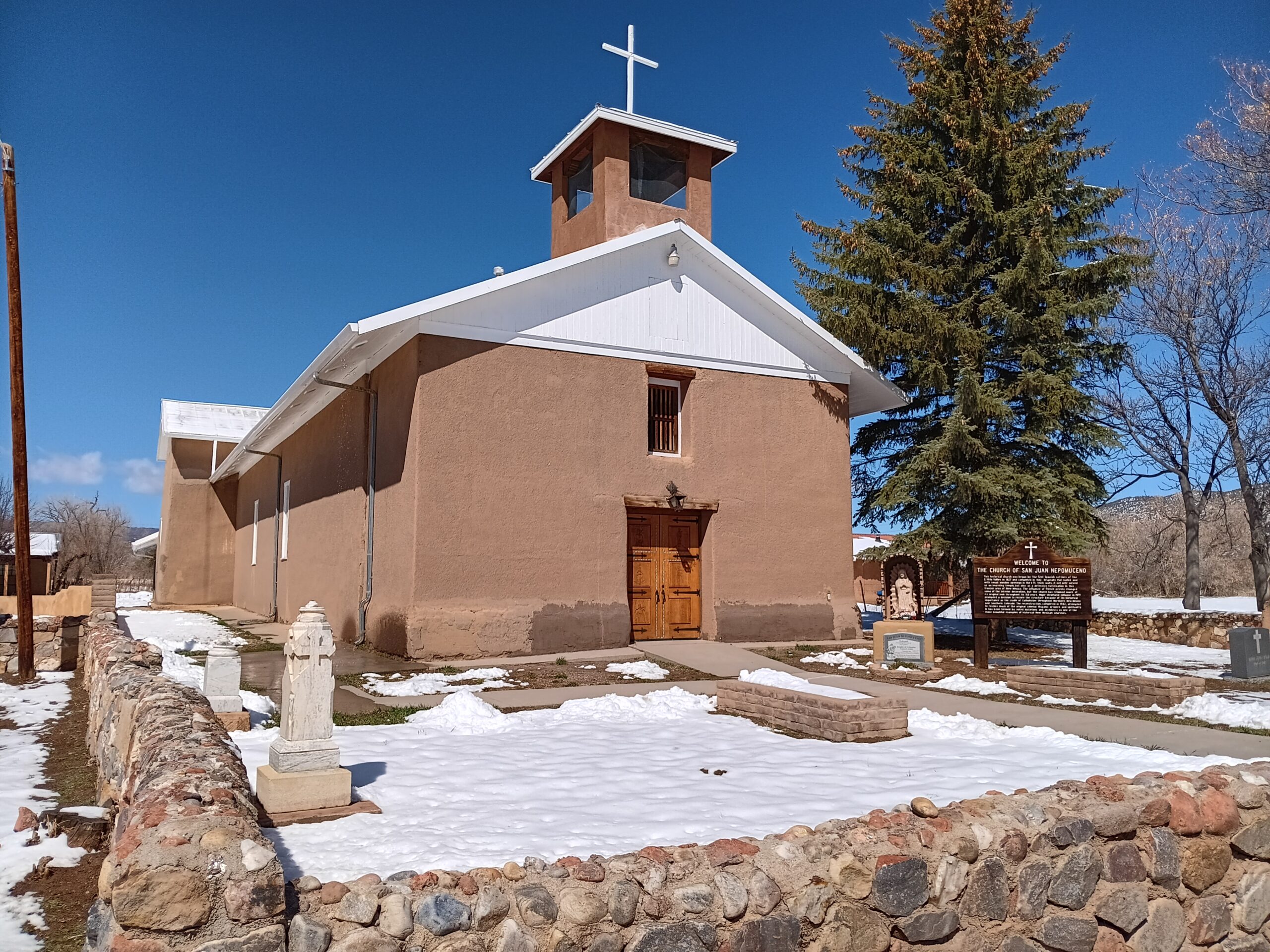
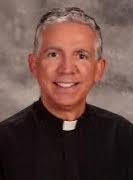 No history of El Rito would be valid without a look at Very Rev. Monsignor Jerome Martinez y Alire. His impact on the community is still being felt today His extensive educational background and knowledge had brought unity to our community. Monsignor was and raised in the barrios of Santa Fe and is part of a 12th generation New Mexican family. His family was supportive in his quest to follow his dream of becoming a Catholic priest. He attended college, and was ordained when he was still a young man. It was then that Monsignor began his quest to help the people of New Mexico to understand the power of Christ and his teachings. He served as priest in El Rito, NM. It was in the small community of El Rito that Monsignor helped the town to rebuild their church after it had fallen down. God helped Monsignor to unite the community and rebuild the church.
 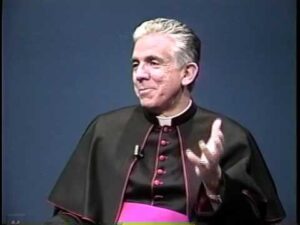 When the Archbishop heard of the wonderful work that he accomplished in El Rito, he was called to help the people of Santa Fe to build a new beautiful church. This church would be called Santa Maria de la Paz, and is one of the most beautiful churches in the Southwest. But his journey was not done there. Msgr. Jerome was called to help in a way that would help him to become one of the most well known personalities in New Mexico. He was then called upon to lead the Cathedral Basilica of St. Francis of Assisi in downtown Santa Fe. It was there that the history and triumphs of Santa Fe's culture was shown by the light that Monsignor had attained by his experiences with small Northern New Mexican towns. PLEASE CONSIDER sharing your memories of this man of God.