Counterculture Movement of the 1960s

With its history of blending cultures and accommodating newcomers willing to take the place on its own terms, New Mexico has long tolerated outsiders and refugees from mainstream America. The state’s reputation as a Bohemian haven dates back at least to the artist colonies and literary circles of the early 1900s, when painters and authors seized on New Mexico as a place where they could shuck cultural bonds, try on new identities, and experiment with new artistic and social paradigms.  

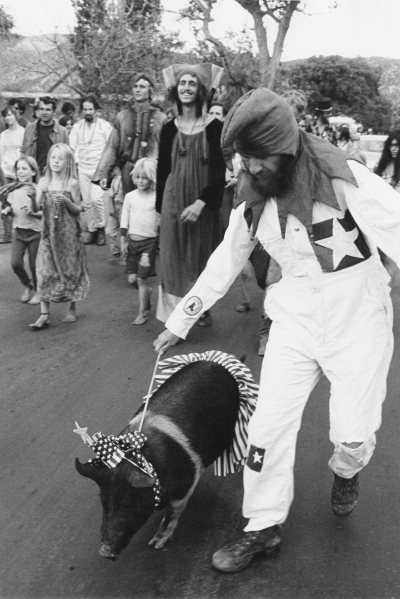
No wonder the counterculture movement of the 1960s expressed itself here in full-throated chorus. "[New Mexico] had a reputation as being an arty, spiritual place,” said one hippie habitué. By the late 1960s, according to one count, the state had 25 communes, and perhaps another dozen alternative communities. At the Woodstock festival, in 1969, the Hog Farm’s Hugh Romney, aka Wavy Gravy, took the stage and announced the group’s commune in Llano, near Peñasco. After that, New Mexico became a mecca for hippies seeking a place to “turn on, tune in, and drop out,” in the immortal words of Timothy Leary. El Rito was the perfect place for some of those of the counter-culture. 
Scroll Through This PDF To Learn More
The Tewa Indians of the Rio Grande and their neighbors

Long before there was a village of El Rito, the area was inhabited by the indigenous people.

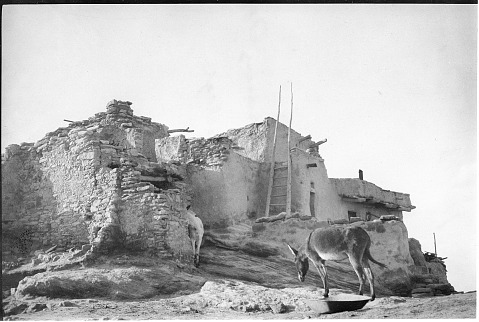
The Tewa country, flanked on the west side of the Rio Grande by the Jemez Mountains and Pajarito Plateau and on the east side by the Sangre de Cristo Range, extended along the river throughout the Espanola Basin of the Rio Grande rift, roughly from Bandelier National Monument north to the Abiquiu/El Rito area.
The Tewa story, briefly reviewed herein and covering the transition from late prehistoric times into the early historic period, takes place within this region. However, interaction with neighboring people, both Indian and Spanish, provides a wider cultural environment within which the Tewas operated.
Between A.D. 1450 and 1540, more than 100 pueblos existed between the Chama Valley on the north and the Socorro area on the south, and from the Pecos, Galisteo Basin, and Salinas area on the east to the Acoma, Zuni, and Hopi villages on the west. These people had much in common. However, they differed regionally from one another in certain crafts, tool kits, architectural features, and cultural practices.
Generally, their homes, small to large pueblos of masonry or coursed adobe, ranged from one to several stories high (seven or more at Picuris in early historic times) and were built in a linear or rectangular plan with a plaza in front or enclosed by the house blocks (as at Tesuque today). In some cases the pueblo was a large compact mass (like Taos).
These prehistoric puebloans farmed, hunted, gathered wild foods, herded turkeys, and pursued a number of crafts which produced a variety of items.
The six-page document below, provides an insight into these ancient people.

The Jaramillo House

Following annexation in 1848 American influence increased and became a major factor after the arrival of the railroad in 1880. The railroad brought ew Mexico into the mainstream of American culture and resulted in a flood of American architectural fashions that were or had been in current use on the East Coast. A wide selection of building materials and manufactured items available to New Mexican builders for the first time was also conducive to change.
Venceslao Jaramillo, the son of a store owner, figured prominently in the development of New Mexico. During his lifetime, Vencesleo was one of four colonels on the staff of territorial governor Otero, a state senator, state chairman of the Republican party and a respected merchant and stockman in the EI Rito area.
Venceslao's wife, Cleofas, was a member of an esteemed pioneer family in the Arroyo Hondo area.
This article about the house, including drawings, appeared in 1980 and is curated by NMSU. Please allow a few minutes for the full document to load. Once loaded, click on the down arrow, left side at the bottom of the page to read the following pages.

A Second Great-Grandfather Remembered

Audio - Remembering

 
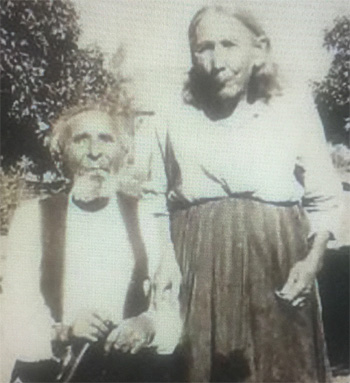
Leonard F. Trujillo researched his great-grandfather, and discovered El Rito. My second great-grandfather, Antonio Maria Atencio, was born December 14, 1835 most likely in El Rito, the Rio Arriba area of Northern New Mexico. His baptism was recorded at the Santo Tomas de Abiquiu church on December 19, 1835. Antonio was a boy of nine when he was recorded living with his family in the 1845 Mexican Census in El Rito, New Mexico. Around 1845 or 1846, Antonio Maria came over the Old Spanish Trail.  Starting from Abiquiu, New Mexico, he traveled the 1200 mile route with his family including his father, Gregorio de Jesus Atencio (1806-1848), mother Maria Guadalupe Lucero (1813-1900) and sister Ana Atencio (1832-?) They eventually settled in San Bernardino Valley, Alta California. Antonio’s father, Gregorio de Jesus, became involved in politics in Alta California during the Mexican American War and fought with the Californio rebels against the invading American forces. Gregorio de Jesus died by 1848 and his widow married Jose de Jesus Martinez on June 29, 1848, recorded at the Plaza Church in Los Angeles. The Atencio family migrated to New Mexico in 1693 traveling from Mexico City and the Valley of Mexico.  The Atencio family can be traced to Brihuega, Toledo Castilla Spain to about the year 1585. They crossed the Atlantic Ocean by ship and settled in Puebla de Los Angeles, Mexico. The Atencios were recruited for the Spanish Recolonization of New Mexico in 1693, traveled the Camino Real beginning in Mexico City, continuing to Queretaro, Zacatecas, Parral, El Paso del Norte, and finally to Santa Fe where they established the new settlement at Santa Cruz de La Canada, New Mexico. Chonito appears in New Mexico Santo Tomas de Abiquiu Baptism books, Mexican Census from El Rito, New Mexico 1845,
 

The Very Rev. Monsignor Jerome Martinez y Alire

No history of El Rito would be valid without a look at  Very Rev. Monsignor Jerome Martinez y Alire. His impact on the community is still being felt today His extensive educational background and knowledge had brought unity to our community. Monsignor was and raised in the barrios of Santa Fe and is part of a 12th generation New Mexican family. His family was supportive in his quest to follow his dream of becoming a Catholic priest. He attended college, and was ordained when he was still a young man. It was then that Monsignor began his quest to help the people of New Mexico to understand the power of Christ and his teachings. He served as priest in El Rito, NM. It was in the small community of El Rito that Monsignor helped the town to rebuild their church after it had fallen down. God helped Monsignor to unite the community and rebuild the church.   When the Archbishop heard of the wonderful work that he accomplished in El Rito, he was called to help the people of Santa Fe to build a new beautiful church. This church would be called Santa Maria de la Paz, and is one of the most beautiful churches in the Southwest. But his journey was not done there. Msgr. Jerome was called to help in a way that would help him to become one of the most well known personalities in New Mexico. He was then called upon to lead the Cathedral Basilica of St. Francis of Assisi in downtown Santa Fe. It was there that the history and triumphs of Santa Fe's culture was shown by the light that Monsignor had attained by his experiences with small Northern New Mexican towns. PLEASE CONSIDER sharing your memories of this man of God.

The Enigmatic Sapawe Pueblo Ruins: A Glimpse into the Past

Audio of impressions of visiting this site (Dave Warren)

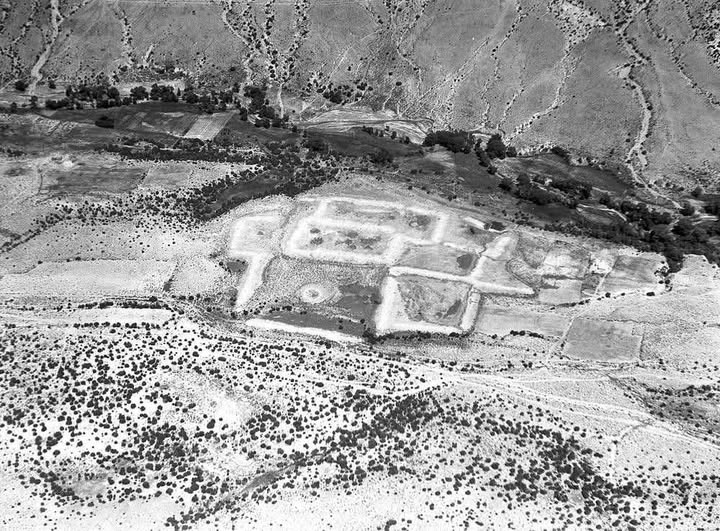
  Introduction: Nestled near the quaint village of El Rito, New Mexico, the Sapawe Pueblo ruins stand as silent witnesses to a vibrant ancestral community that once thrived in the region. These ruins provide a window into the lives and cultural practices of the inhabitants who resided there before the pueblo was abandoned. Here, we will delve into the history of the Sapawe Pueblo and explore what life was like for its inhabitants, drawing upon a range of scholarly sources to provide a comprehensive understanding of this fascinating archaeological site. A Brief History: The Sapawe Pueblo, believed to have been constructed around the 13th century, was an integral part of the Native American ancestral Puebloan culture. Located in the northern Rio Grande region, the pueblo was ideally situated for agricultural practices due to the fertile soils and reliable water sources. The Sapawe people skillfully cultivated maize, beans, and squash, forming the backbone of their subsistence economy. Life Before Abandonment: Prior to the abandonment of the Sapawe Pueblo, the inhabitants ( who are believed to have been Tewa) enjoyed a rich cultural life, characterized by intricate social structures and spiritual practices. The pueblo was a bustling community, with multi-story adobe structures and communal spaces that served as gathering places for ceremonies and social interactions. Scholars have unearthed evidence suggesting that the Sapawe people were skilled artisans, adept at creating exquisite pottery and intricate jewelry. Their craftsmanship reflected both their artistic sensibilities and a deep connection to the natural environment. Additionally, the inhabitants engaged in trade networks with neighboring communities, exchanging goods such as turquoise, shells, and obsidian. Cultural and Spiritual Practices: The Sapawe Pueblo's cultural and spiritual practices played a significant role in shaping the daily lives of its inhabitants. Archaeological findings indicate the presence of kivas, subterranean ceremonial chambers, which were central to religious ceremonies and communal gatherings. These sacred spaces were adorned with intricate murals, reflecting the spiritual beliefs and cosmology of the Sapawe people.

Conclusion: The Sapawe Pueblo ruins near El Rito, New Mexico, offer a tantalizing glimpse into the lives of its ancient inhabitants. Through careful archaeological research and analysis, scholars have unraveled the complexities of this once-thriving community. The Sapawe people's rich cultural heritage, agricultural practices, and artistic expressions are a testament to their resilience and ingenuity. By exploring the ruins, we gain a deeper appreciation for the diversity and depth of Native American ancestral Puebloan cultures that once flourished in the region. 

Note: The Sapawe pueblo is a gated, state-owned site and is closely watched. Anyone entering without permission could be fined $500. This is necessary because of years of vandalism and partying in the area.

San Juan Nepomuceno

LISTEN TO THE HISTORY OF THIS CHURCH

It has been called one of the most beautiful examples of historical New Mexican churches.

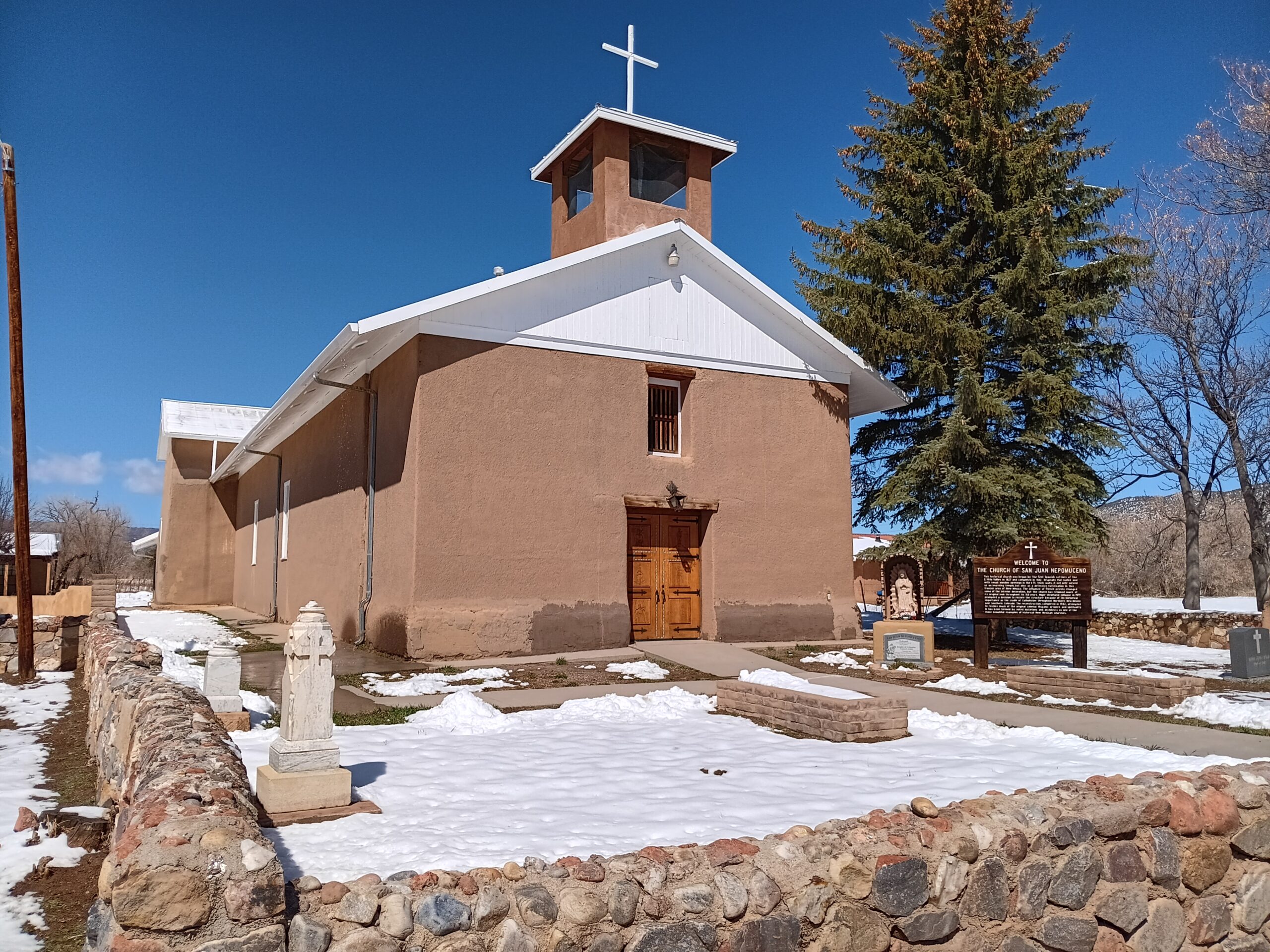
El Rito, located northwest of Ojo Caliente in Rio Arriba county, was established about 1808 when Hispanic settlers from the Abiquiu area began to move in to raise cattle and cultivate the land. It was originally named El Rito Colorado after the creek that passes through the village. It soon became evident that a church was needed in the area since the nearest church in Abiquiu was 14 miles away.

Construction of San Juan Nepomuceno began in approximately 1830 and probably took two years to complete. It was built in the typical cruciform style with thick adobe walls and flat roof supported by heavy vigas.

DO YOU HAVE MEMORIES OF THIS CHURCH? PLEASE CONSIDER SHARING THEM HERE.

When Wavy Gravy Came To El Rito

Wavy Gravy -1969
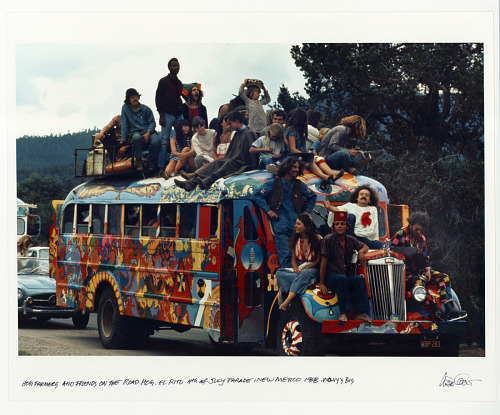
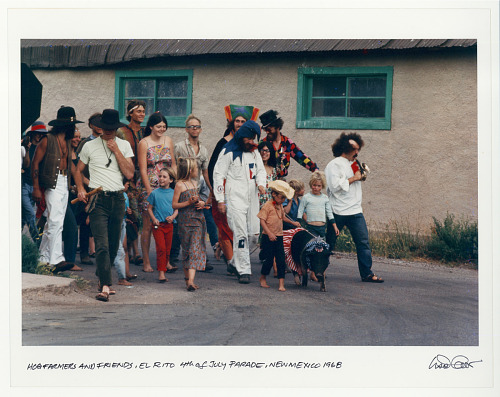
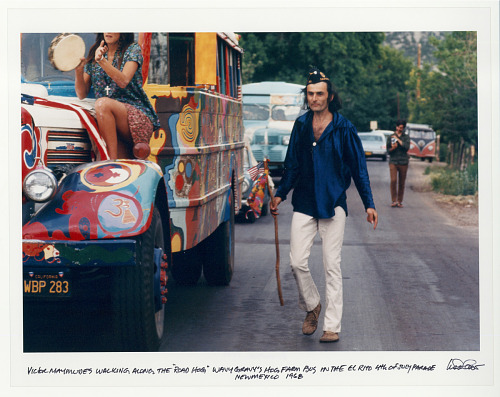
Hugh Nanton Romney Jr. (born May 15, 1936), known as Wavy Gravy, is an American entertainer and peace activist best known for his role at Woodstock, as well as for his hippie persona and countercultural beliefs. Romney has founded or co-founded several organizations, including the activist commune the Hog Farm, and later, as Wavy Gravy, Camp Winnarainbow and the Seva Foundation. He founded the Phurst Church of Phun in the 1960s, a secret society of comics and clowns that aimed to support ending of the Vietnam War through political theater, and has adopted a clown persona in support of his political activism, and more generally as a form of entertainment work, including as the official clown of the Grateful Dead. As Wavy Gravy, he has had two radio shows on Sirius Satellite Radio's Jam On station. A documentary film based on his life, Saint Misbehavin': The Wavy Gravy Movie, was released in late 2010 to generally positive reviews. Romney was awarded the Kate Wolf Memorial Award by the World Folk Music Association in 1992. In 1968, Wavy Gravy and his Hog Farm commune, visited El Rito, and took part in the village's Fourth of July parade. It was during that visit that photographer Lisa Law took the pictures below, which are now part of the Smithsonian National Museum Of American History.
1998.0139.127
1998.0139.129
1998.0139.130Lisa Law had a popup exhibit in Santa Fe at which she shared many of her famous photographs, including those of Wavy Gravy in El Rito.
DO YOU HAVE MEMORIES OF THIS VISIT? PLEASE CONSIDER LETTING US KNOW. YOU CAN DO THAT HERE.

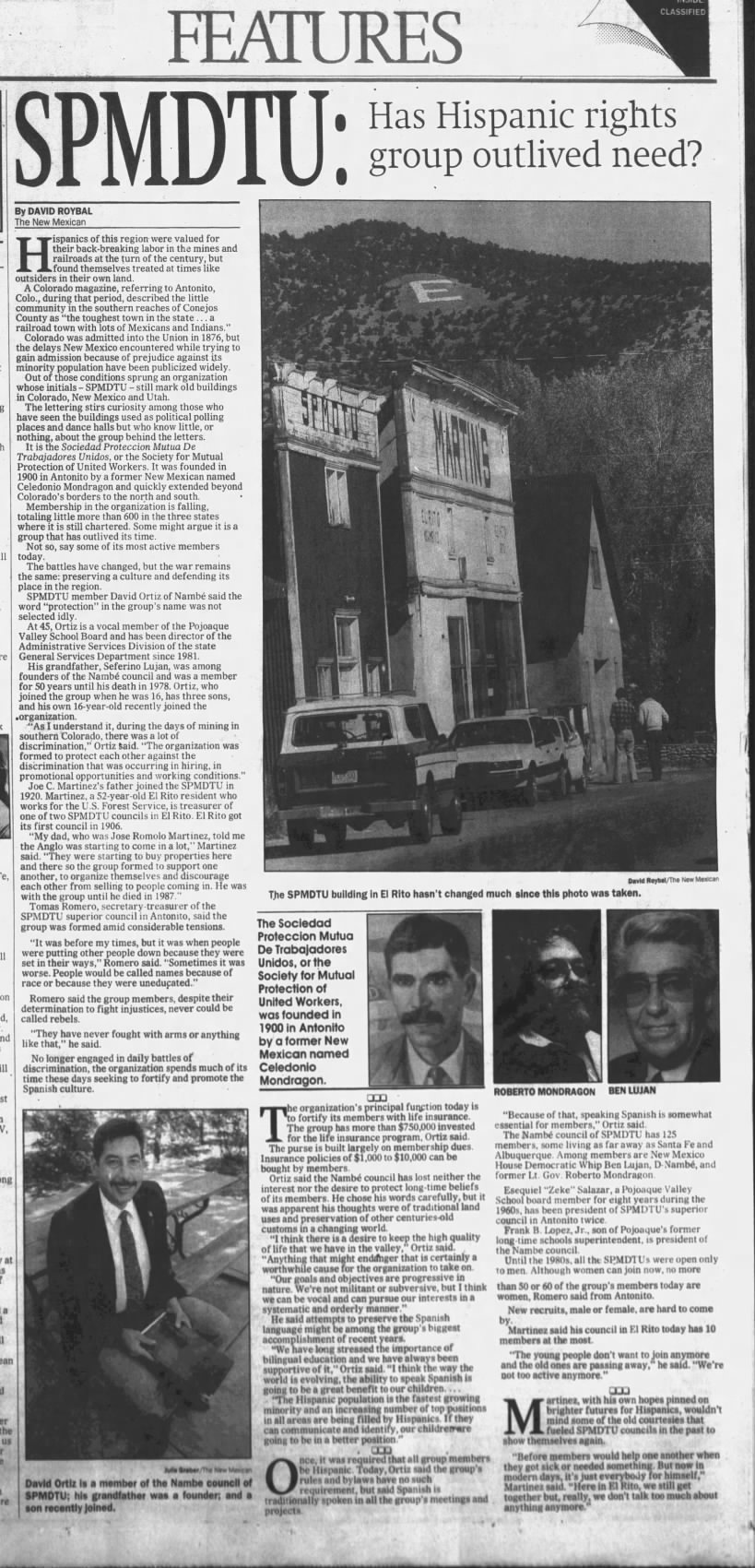
The Normal School

1909-1969 The most important and enduring accomplishment of El Rito in the early part of the twentieth century (1909), was the creation of the Spanish American Normal School.  The school was of the utmost significance in the history of New Mexico’s early Educational advancement.  It advantageously benefitted the educational needs of the students of Northern New Mexico for over sixty years. Everyone was in for a surprise in 1909 when New Mexico declared open the Spanish American Normal School at El Rito. The school had been founded to train teachers for the vast region of the Río Arriba in which there were few schools and the citizenry still did not speak English, sixty years after becoming a territory of the United States. The Territory of New Mexico, in quest of statehood, had decided that fluency of its people in English would earn it the right to become one of the Forty-eight, which it did three years later. State and school officials were dismayed that few students were sufficiently prepared to become teachers. First, most had to learn to cipher and to read and write. The region's geographic isolation, scant means of communication, and lack of roadways rendered it impossible for anyone to make the proper estimate of educational need, it turned out. But the school's students soon discovered how much they liked the Normal School, and how willing the school was to meet their educational need. Although the Normal School trained as many as one hundred teachers in the first decades, in time it became an elementary and high school with strong traditions and loyal students. As a boarding campus, the Normal School attracted students from throughout New Mexico, many at a very young age. Children of the Normal School recount how unity of spirit created a new culture of Americans that few knew about, and how their esprit was built on mutual esteem and shared belief. Through the traverse of time, the Normal has endured a variety of social, legislative, and financial obstacles. Its founding in 1909 was hampered by territorial legislators who failed to see the needs for education of poor Hispanic children in Northern New Mexico. Its rural area was populated by Hispanic people that were descendants of early settlers from Spain, living in very small villages and their livelihood was derived from raising cattle and sheep.  The green valleys provided small streams to irrigate their gardens and pastures. They were consumed with basic survival and had little time or inclination to meander into the realm of politics.  The territorial legislators were highly influenced by the larger populated cities and the eastern part of the state.  Northern New Mexico was a rural area and its needs were diffused by the vastness of geography, the scarcity of its population and regretfully, the fact that it was mainly a poor Spanish-speaking populace. The economics of the territory were less than prosperous.  The territory lacked a cohesive government infrastructure, no real industrial base existed and notably, it lacked a  well defined system for education.  To further distract from its education mission, the territory was in the midst of battling an image of ignorance that had hampered its entrance into the union as the 47th state of the United States.  The fact that the Spanish language was the primary language spoken further hampered the entrance of the Territory of New Mexico into the Union. Not withstanding, all these obstacles, objections and oppositional forces, the NORMAL was legislated into existence in 1909, before New Mexico had become a state.  Largely through the efforts of three men, a legislator, Colonel Venceslao Jaramillo, an El Rito native, Salomon Luna, a senior statesman from Tierra Amarilla, that became a spokesman for the preservation of the language and culture of the Hispanic people, and L. Bradford Prince, a Chamita resident.  Prince, a former territorial governor, who established the New Mexico College and university system and later was the territorial senator from Rio Arriba County. These three men understood the need for education, had a vision to fulfill the need, and exerted their influence to establish the Spanish American Normal School. The original objective of its creation was to train students to become teachers for the local schools in Northern New Mexico. The Normal’s mission evolved through its sixty year history.  Its mission never deviated from its goal to educate and prepare students to lead fruitful and successful lives.  Its last senior graduating class was in 1969.  Sixty years after opening its doors for the first enrollment in 1909. The school’s educational mission was moved to a campus in Espanola and is now known as Northern New Mexico College, where it continues to provide educational opportunities to students of Northern New Mexico. In 1939, a study was done of the school, as part of a thesis. You can read that here IF YOU ATTENED OR WERE PART OF THIS SCHOOL,  WE WANT TO HEAR FROM YOU. DO THAT BY JUST CLICKING HERE.