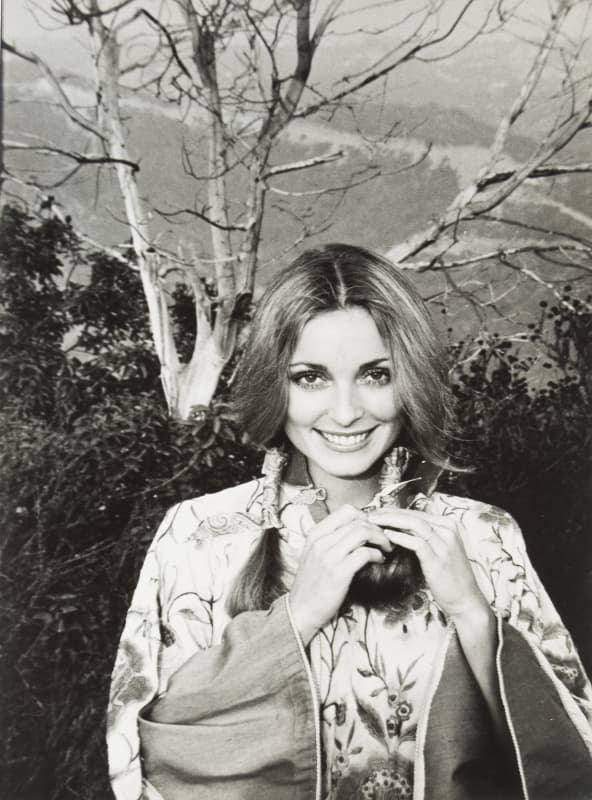
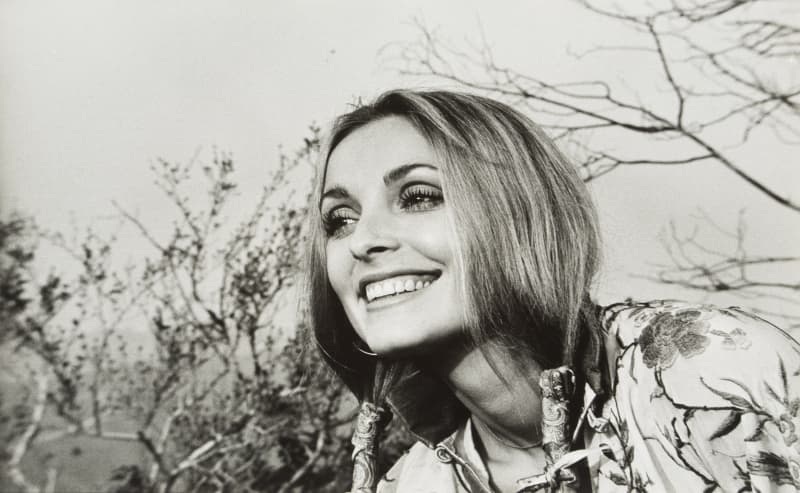
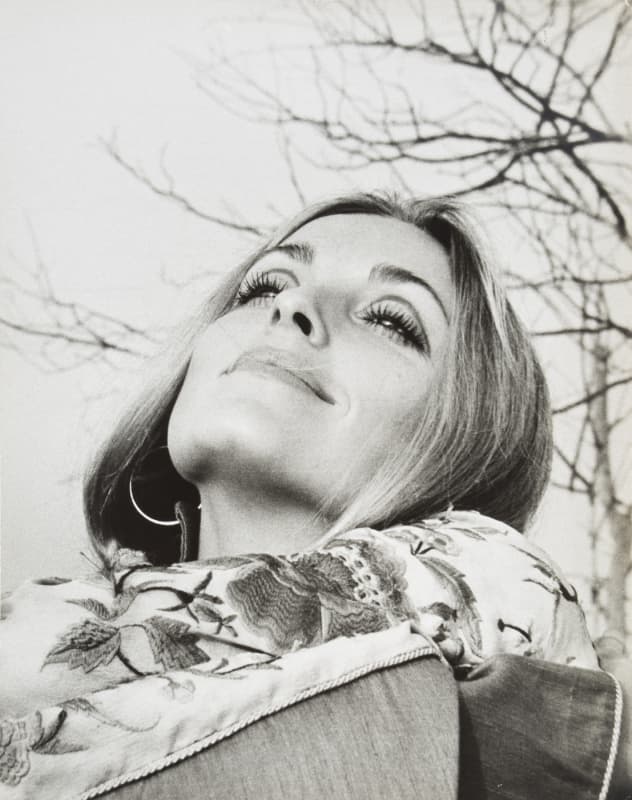
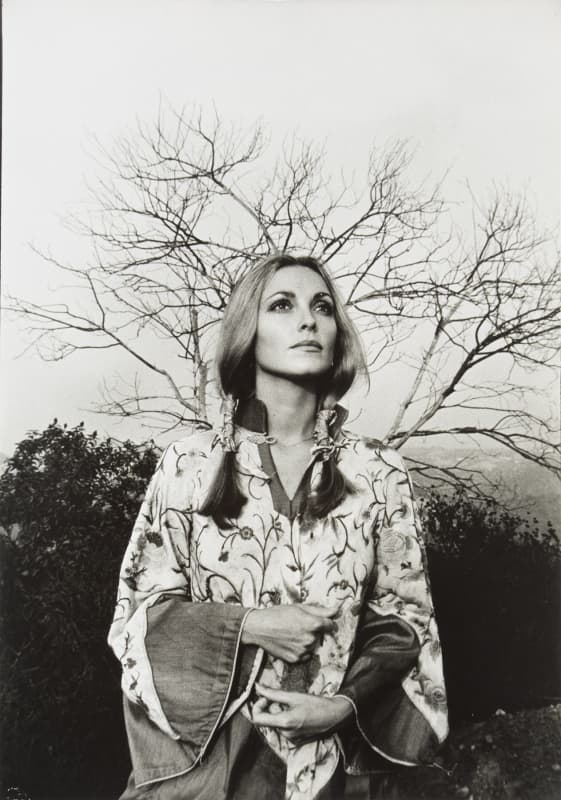
Photographs of Sharon Tate in 1969 by Walter Chappell.
Walter Chappell
“The Photographer at the End of the Road”
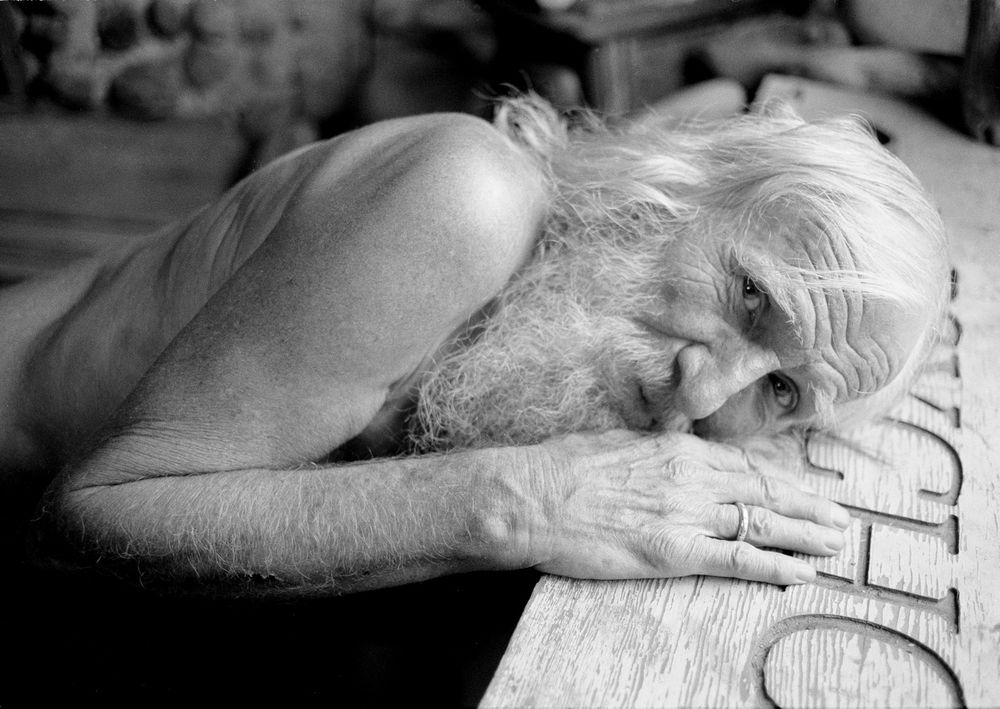
At the northern edge of El Rito, where the village begins to give way to cottonwoods, oak, running water and the foothills of the Carson National Forest, Walter Chappell found the place where his long wandering finally ended.
He had lived on both coasts, worked in New York and Rochester, photographed in California and Hawaii, spent time around Taos, associated with some of the most important photographers of twentieth-century America, and built darkrooms wherever his restless life carried him. Then, in 1987, at the age of sixty-two, Chappell acquired a small adobe house on roughly an acre in El Rito.
It stood literally near the end of the road. Beyond it was a cattle guard and a dirt track climbing toward the woods and higher grazing country of the Carson National Forest. A small river passed through the property. Cottonwoods and oaks surrounded the house. Here Chappell would spend the final thirteen years of his life.
For a photographer who had spent decades trying to understand the relationship between the human body, plants, stone, water, light and consciousness, it was an extraordinarily appropriate place to stop.
And although Walter Chappell came to El Rito relatively late in life, his story belongs in the history of the village for an important reason:
El Rito was not merely where Walter Chappell retired. It became his final studio, classroom, laboratory and landscape.
A Life That Began Far from New Mexico
Walter Landon Chappell was born in Portland, Oregon, on June 8, 1925. His interests initially ranged far beyond photography. He studied architectural drawing at Benson Polytechnic School and piano and musical composition at Portland's Ellison-White Conservatory. Music would remain important throughout his life; friends remembered him as an intense and improvisational pianist as well as a photographer, poet and writer.
During his youth he encountered photographer Minor White, a relationship that would become one of the most important artistic and intellectual friendships of Chappell's life. After serving as a paratrooper in the Army during World War II, Chappell spent time in San Francisco and entered a photographic world that included White as well as Ansel Adams, Imogen Cunningham and Edward Weston.
For Chappell, however, photography was never simply a matter of recording what stood in front of a lens.
He was interested in what a photograph might reveal beneath appearances.
That conviction placed him squarely within the tradition associated with Alfred Stieglitz and Minor White: the idea that a photograph of a rock, tree, body or pool of water could operate on several levels simultaneously—as physical description, abstract composition and expression of an interior state. His mature photographs are often less about identifying an object than about making the viewer look at it long enough for the familiar to become strange again.
Rochester and the Center of American Photography
In 1957 Chappell went to Rochester, New York, where he worked closely with Minor White and became involved with the George Eastman House, one of the most important photographic institutions in the country.
From 1957 until 1961 he served as the museum's curator of prints and exhibitions. He was also associated with Aperture, the influential photography journal founded by White and others in 1952.
This placed Chappell near the center of serious American photography at precisely the moment when photography was establishing itself more firmly as a museum art.
His contacts during these years were remarkable. The circle surrounding Eastman House and Aperture included photographers, historians and curators who would shape the study of photography for decades.
But institutional life did not suit Chappell for long.
He was far too independent.
In the early 1960s he became a driving force behind the Association of Heliographers, a cooperative of photographers that included Paul Caponigro, Carl Chiarenza, William Clift, Marie Cosindas, Nicholas Dean and others. Chappell helped establish and run their New York gallery, which attempted to give photographers greater control over the presentation of their own work.
Then he moved again.
And again.
According to his obituary, Chappell would move more than ten times over the course of his life, building approximately twenty-five darkrooms and three houses along the way.
That restlessness makes what eventually happened in El Rito all the more significant.
Eventually those interests drew him toward northern New Mexico.
New Mexico
Chappell's relationship with New Mexico preceded his permanent move to El Rito.
He spent time in Taos, where he photographed the Southwestern landscape and became connected with the extraordinary community of artists and photographers gathering in northern New Mexico. Photographer Paul Caponigro later remembered Chappell as part of an unusually rich New Mexico photographic circle that also included figures such as Beaumont Newhall and Eliot Porter.
The landscape offered Chappell exactly the forms he had spent years seeking.
Bare stone.
Dry earth.
Plants.
Water.
Human bodies illuminated by high-altitude light.
One place became particularly important to him: Plaza Blanca—the White Place—near Abiquiú. Chappell photographed its eroded formations and returned there with other artists and photographers. A surviving 1988 photograph, for example, records Chappell photographing the great Mexican photographer Manuel Álvarez Bravo at Plaza Blanca.
Thus, before El Rito became his home, Chappell was already moving through the broader Abiquiú–Taos–Santa Fe artistic landscape.
Photographing the Invisible
Chappell was never satisfied with conventional photographic boundaries.
During the 1970s he began experimenting extensively with high-voltage, high-frequency electron photography of living plants, work sometimes associated with Kirlian photographic techniques.
Leaves, flowers and other organic forms appear surrounded by luminous electrical traces.
Chappell called one major body of this work Metaflora.
For him, these images were not simply technical curiosities. They belonged to the same lifelong investigation visible in his landscapes and body photographs—the search for forms, energies and structures that ordinary perception could easily overlook.
Recognition followed.
Chappell received National Endowment for the Arts Photographer's Fellowships in 1977, 1980 and 1984. The NEA's own 1977 annual report records his first fellowship, then worth $7,500.
Yet Chappell remained uncomfortable with the conventional machinery of the art world.
His career repeatedly moved between major museums and galleries on one hand and isolated houses, improvised studios and remote landscapes on the other.
El Rito would bring those two worlds together.
1987: The End of the Road
In 1987 Walter Chappell acquired his El Rito property.
The best surviving description comes from photographer Elvira Piedra, who later lived and worked there with him.
The house was a modest adobe originally constructed by Opal Null, a Los Alamos National Laboratory secretary, with help from a local teenager. Later owners altered it, and Chappell continued the process.
He enclosed a porch and transformed it into a sunroom.
Plants crowded its windowsills—begonias, aloes and epiphyllums.
Using stones collected from the river, he constructed another room and converted it into a sauna, positioning a tall window so natural light entered the stone interior.
But the most important part of the property was not the house.
It was the water.
A small river, perhaps twenty feet across in places, ran through the land.
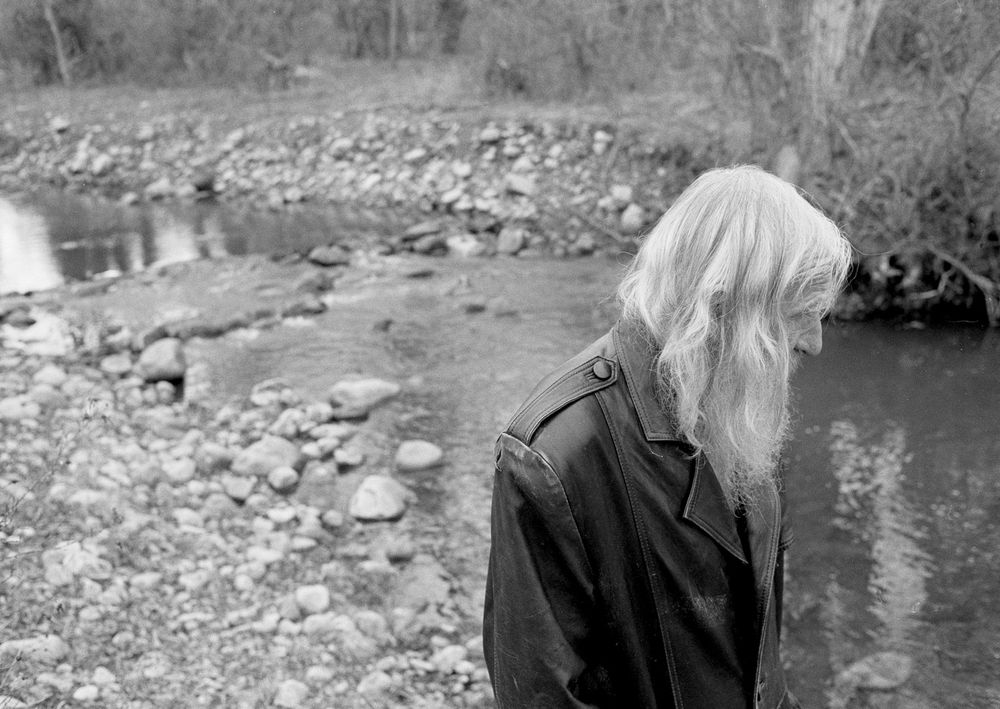
There were stones beneath the water and a small pond. Winter ice formed swirling patterns. During spring runoff the stream rose dramatically. In summer the river became a place for bathing, contemplation and rearranging stones and small dams, subtly changing the movement and sound of the water.
Around it grew cottonwoods, cedars and oaks.
This was almost a living version of Walter Chappell's photographic vocabulary.
Water.
Stone.
Plant.
Body.
Light.
Time.
Change.
The photographer who had spent decades arranging those elements inside photographs was now living among them.
El Rito Becomes a Classroom
Chappell did not simply disappear into retirement.
Photographers continued to find him.
His El Rito house became an informal place of teaching and apprenticeship, carrying forward a lineage that stretched from Chappell through Minor White and into an earlier generation of American photographic modernism.
The New Mexico Museum of Art describes him as a mentor to many younger photographers while living in El Rito.
Father Michael Flecky worked with Chappell in northern New Mexico during 1990–91; a surviving photographic volume documenting that period is now held by Creighton University Archives.
In 1997 another young photographer made a much greater commitment.
Elvira Piedra moved to El Rito specifically to study with Walter Chappell.
She would spend the next several years learning large-format photography and photographic printing from him.
Chappell encouraged her to use an 8 × 10 view camera. She worked beside him in the darkroom, mixed photographic chemistry, helped process film and prints and learned the discipline of traditional silver-gelatin printmaking. Chappell also entrusted her with organizing portions of his photographic archive, sequencing photographs and assisting with his writing.
Her own photographs provide something especially important for the El Rito History Project:
They show Walter Chappell in El Rito.
A striking 1997 portrait survives—an 8 × 10 contact print showing the elderly photographer with long white hair and beard, photographed in the environment that had become his final home.
Another photographer, Stu Levy, visited and photographed Chappell in El Rito in 1999, giving us additional visual documentation from the last year of his life.
The River as Studio
One particularly memorable surviving portrait captures something about Chappell that no conventional studio photograph could.
Photographer Blaine Ellis photographed the elderly Chappell sitting nude on a rock in a stream, facing a cow skull resting nearby in the water.
The New Mexico Museum of Art now holds the image.
Its catalog description notes both Chappell's El Rito residence and his reputation as a mentor. The photograph is almost an accidental summary of Chappell's artistic worldview: an aging human body, stone, flowing water, bone and mortality occupying the same frame.
It could have been one of Chappell's own photographs.
Instead, Chappell had become part of the landscape he had spent a lifetime photographing.
Recognition from New Mexico
By the end of the 1990s, Chappell's contribution was increasingly being recognized in the state he had chosen as his final home.
On October 1, 1999, Walter Chappell was among the recipients of the 26th Annual New Mexico Governor's Awards for Excellence in the Arts. The other honorees that year included Lloyd Kiva New, Cecil Howard, Roger Aston, Roberto Martinez and Laura Fragua Cota.
The award must have represented an unusual moment in Chappell's career.
The artist who had spent so much of his life outside conventional institutions—moving between houses, darkrooms and landscapes—was being officially recognized by New Mexico.
Yet he returned afterward to El Rito.
Back to the adobe house.
Back to the darkroom.
Back to the river.
The Last Summer
Walter Chappell celebrated his seventy-fifth birthday in El Rito on June 8, 2000.
Years later, Elvira Piedra remembered friends and family traveling to the village for the gathering. There was salmon, lamb and cake. Lemon ice cream was made by hand beside the river, recalling ice cream Chappell's mother had prepared during his childhood.
It would be his final birthday.
Walter Chappell died in Santa Fe on August 8, 2000, from complications associated with lung cancer and a lung infection.
He was seventy-five years old.
His national obituaries described a photographer whose finely printed images of landscapes, natural objects and the human body possessed an unusual mystical intensity. They also noted something that matters particularly to this project:
His home was El Rito, New Mexico.
Why Walter Chappell Matters to El Rito
Walter Chappell's presence reveals another part of El Rito's twentieth-century history.
This small northern New Mexico village attracted not only ranchers, teachers, religious leaders, writers and counterculture experimenters. It also became home to an internationally recognized photographic artist whose work today resides in important museum collections.
There is a fascinating parallel with Peter van Dresser, who had arrived in El Rito decades earlier seeking a place where landscape, experimentation and daily life could become inseparable. Chappell's experiment was different, but the attraction was remarkably similar.
Both men reached El Rito after lives spent elsewhere.
Both found something in the isolation of the village.
Both built or altered their homes according to their ideas.
And both treated the surrounding landscape as something far more significant than scenery.
For Walter Chappell, El Rito became the culmination of an artistic philosophy.
He had spent almost half a century photographing life's elemental forms.
At the end of his life, he no longer needed to travel far to find them.
They were outside his door.
A cottonwood.
A stone.
A human hand.
Ice forming over the river.
Sunlight entering an adobe room.
Water passing endlessly toward the valley below.
At the end of the road in El Rito, Walter Chappell had finally found a landscape large enough for the questions he had been asking all his life.