
An agricultural world already existed
Long before Spanish settlement, Pueblo farmers raised corn, beans, and squash. Their success depended on knowledge of soils, rainfall, frost, seed selection, and the different growing conditions of valleys and uplands. At Bandelier, documented practices included moisture-conserving gardens, check dams, widely spaced planting, and scattered fields that reduced the danger of losing an entire harvest. These are regional examples—not proof that every technique was used at Sapawe. National Park Service: Ancestral Pueblo Farming
This is the foundation visitors need to understand: introduced crops joined an existing agricultural system. Indigenous knowledge continued through the cultivation of American crops and the practical decisions that made farming possible in a demanding environment.
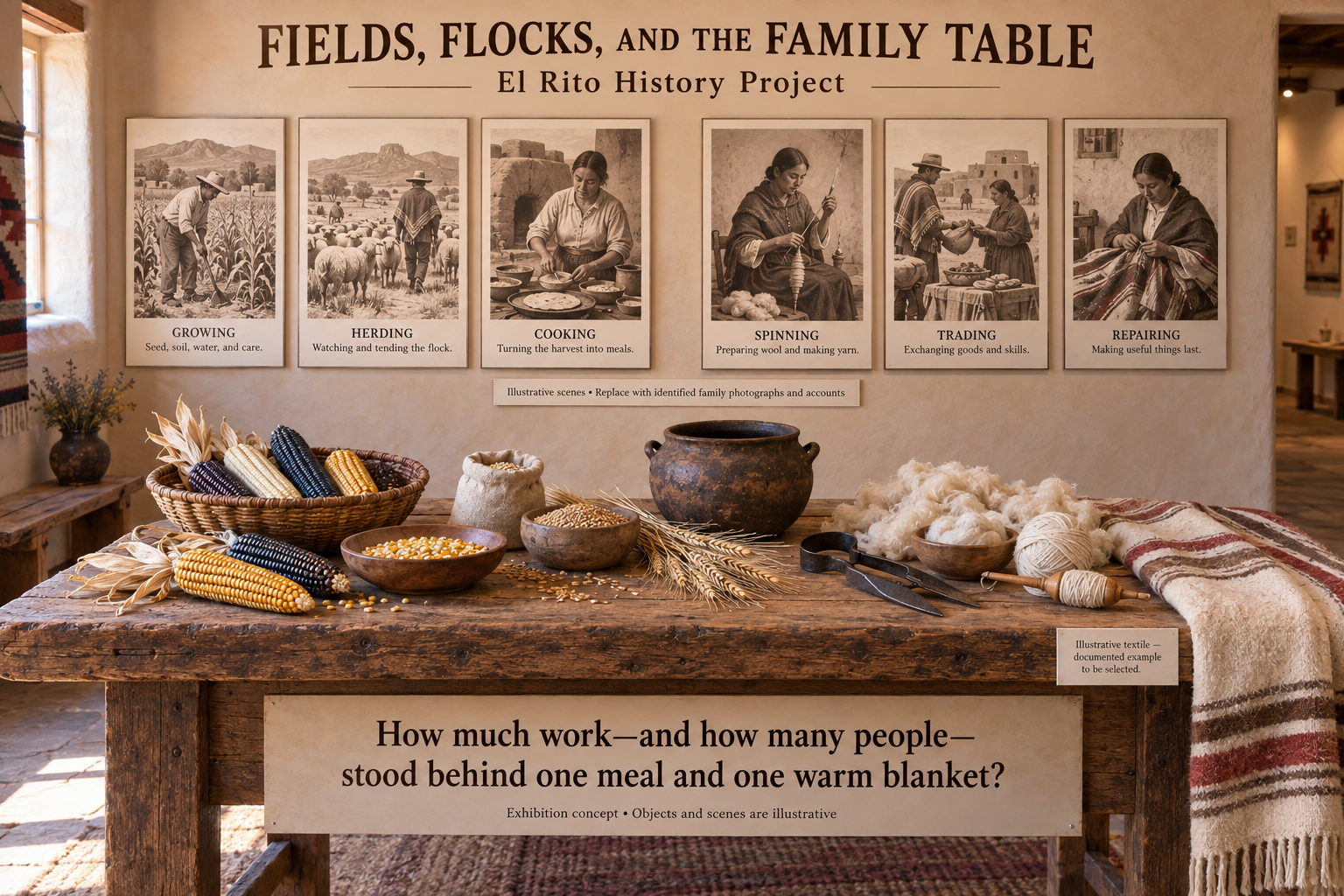
New crops and animals changed the household economy
Archaeological evidence from a seventeenth-century Spanish ranch near La Cienega includes wheat, corn, peas, peaches, and apricots, together with sheep, goats, cattle, pigs, chickens, and hunted animals. Finding these together demonstrates how introduced and existing foods became part of colonial households. It does not establish an identical diet for early El Rito.
| Agricultural resource | Work between production and use | Household contribution |
|---|---|---|
| Corn | Planting, tending, harvesting, drying, shelling, and grinding | Meals, stored food, and seed for another season |
| Beans and squash | Cultivation, harvesting, drying or storage, and cooking | Dietary variety and provisions beyond harvest |
| Wheat | Harvesting, threshing, winnowing, milling, and preparing dough | Flour for bread and other foods |
| Sheep | Herding, watering, shearing, preparing fiber, and butchering | Wool, meat, hides, and products for exchange |
| Cattle and goats | Herding, feeding, watering, and processing animal products | Meat, milk where used, hides, and livestock wealth |
From the flock to the blanket
Sheep brought a new fiber into a region with an older textile history. Ancestral Pueblo weavers had worked cotton on upright looms long before colonization. Wool and European-style treadle looms subsequently became part of the Southwest’s distinct Pueblo, Navajo, and Hispano textile traditions. These traditions influenced one another while retaining different techniques and meanings. Fowler Museum’s textile history
A fleece did not become a blanket by itself. Fiber had to be prepared, spun into yarn, and woven; some yarn was dyed.
This history also included coercion. The Maxwell Museum documents colonial weaving workshops in northern New Mexico that relied on enslaved Indigenous workers. That regional history belongs alongside accounts of household skill and cultural exchange, without attributing such a workshop to El Rito unless evidence establishes one. Maxwell Museum: Saltillo and Rio Grande weaving
Survival required planning for the next season
The household connection is especially clear when we ask what had to be reserved: seed for planting, provisions for winter, breeding animals for future flocks, and usable clothing and bedding. Seed saving is directly documented in the National Park Service’s account of ancestral Pueblo agriculture.